Build This: The AI SDR System That Runs Your Entire Outbound Operation
Most AI SDR tools automate sending. The system worth building automates the full cycle — research, personalization, sequencing, reply routing, and learning. Here is the complete architecture.

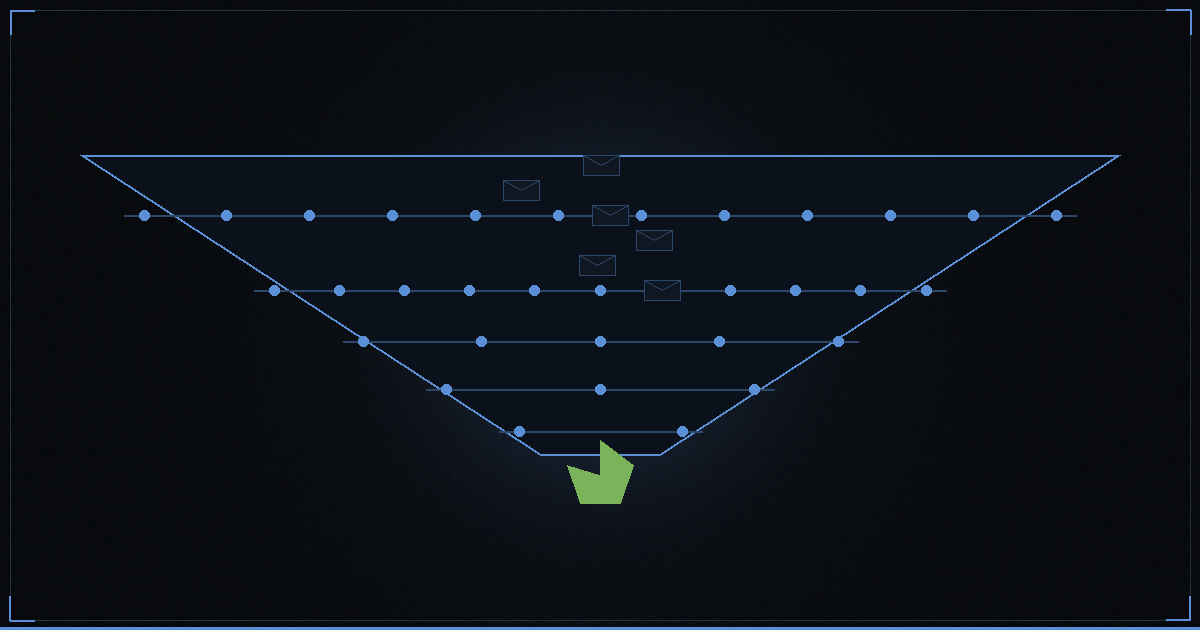
Most AI outbound tools do one thing: they make it cheaper and faster to send emails that nobody reads. Volume without signal is just spam with better deliverability. The system worth building is not an AI that sends more emails. It is an AI that runs the complete outbound cycle — research, personalization, sequencing, reply intelligence, and continuous learning — with the human involved only at the relationship layer.
This is the system Theta Intelligence builds for clients. Here is the complete architecture.
Layer 1 — The Intelligence Input
The system begins with signal, not with a list of email addresses. Signal means information about the prospect that creates a genuine, specific reason to reach out. Three categories of signal are worth automating.
Trigger events: company funding announcements, executive hires, product launches, earnings calls, press mentions, job postings that reveal strategic priorities. These are events that create a legitimate opening for outreach — the company just raised a Series B and has the budget and appetite to invest in the infrastructure to support their growth.
Intent signals: technology stack changes detected through tools like BuiltWith or Datanyze, increased hiring in specific functions that indicate a business priority shift, increased content production around topics relevant to your offering. These are behavioral signals that indicate a prospect is in the market for what you offer before they have raised their hand.
Relationship signals: mutual connections on LinkedIn, shared alumni networks, prior interactions with your content, prior contact with your company in any form. These signals enable the highest-performing personalization because they are genuinely specific and verifiable.
Layer 2 — The Research Engine
Once a prospect enters the system based on signal, the research engine builds a complete profile. This is where AI creates the most leverage — it can conduct in minutes the research that a human SDR would spend thirty minutes on per prospect.
The research engine pulls from: the company website and recent content, the prospect's LinkedIn activity and published writing, the company's job postings, recent news mentions, the company's product and pricing pages, and any third-party data enrichment from Apollo, Clay, or similar tools.
The output is not a data dump. It is a structured profile that answers specific questions: What is this company's primary growth challenge right now? What does this specific person care about based on their public writing and activity? What is the most specific connection between their current situation and what we offer? What is the best possible opening line for this specific person?
Layer 3 — The Personalization Engine
The personalization engine takes the research profile and generates outreach that reflects genuine knowledge of the prospect's situation. Not mail-merge personalization that inserts the company name and recent funding round. Real personalization that demonstrates you understand their business.
The Show Me You Know Me framework, developed by Sam McKenna, is the gold standard: the first sentence of every outreach references something specific to the prospect that proves you did real research. Not their job title. Not their company name. Something specific: a post they wrote, a challenge their company faces, a connection between their recent announcement and a specific problem your solution addresses.
The AI generates this personalization at scale. A human reviews a sample for quality. The system sends at volume. The personalization rate — the proportion of outreach that references something specific to the prospect — is one hundred percent. That is not achievable by human SDR teams.
Layer 4 — The Sequence Architecture
The sequence is not a drip campaign with fixed timing. It is an adaptive system that responds to engagement signals. An email that gets opened but not clicked triggers a different follow-up than one that gets no open. A LinkedIn profile view after a cold email triggers an immediate connection request. A reply — even a negative one — routes to a human immediately.
The sequence spans channels: email for the primary outreach, LinkedIn for amplification and social proof, and in high-value accounts, direct mail for physical presence that breaks through digital noise. Each channel has its own cadence logic and its own signal triggers.
The timing logic is informed by data from previous sequences: what days and times have produced the highest reply rates for this prospect profile? What sequence length produces the best balance of conversion rate and opt-out rate? These parameters start with industry benchmarks and update from the system's own performance data.
Layer 5 — Reply Intelligence
The reply handling layer is where most AI outbound systems fall down. They can send. They cannot handle what comes back.
A robust reply intelligence system classifies every reply into one of five categories: interested, not now, wrong person, objection, unsubscribe. Each category has a different routing path.
Interested replies route immediately to a human with a full briefing: the prospect's research profile, the conversation history, suggested next steps, and calendar availability. The human's job is to close the meeting, not to figure out who they are talking to.
Not now replies trigger a nurture sequence — value-add content delivered at appropriate intervals until the timing changes. Wrong person replies trigger research to identify the correct contact. Objection replies trigger objection-specific follow-up sequences that have been tested and refined.
Unsubscribe replies trigger immediate suppression. Nothing damages deliverability and reputation faster than ignoring opt-outs.
Layer 6 — The Learning Loop
Every output of the system — every open, click, reply, meeting booked, and deal closed — feeds back into the system's parameters. Subject lines that generate high open rates are weighted more heavily in future generation. Personalization hooks that generate replies are identified and used as templates. Sequence lengths that produce the best conversion at acceptable opt-out rates are reinforced.
The system that ran in month six is measurably better than the one that ran in month one — not because anyone manually tuned it, but because the learning loop was designed in from the start.
This is the system worth building.
Not an email tool. An outbound intelligence operation.
Build it once. Let it compound.